سازندهگرایی: دلالتهای جدید برای تکنولوژی آموزشی (دافی و جوناسن)
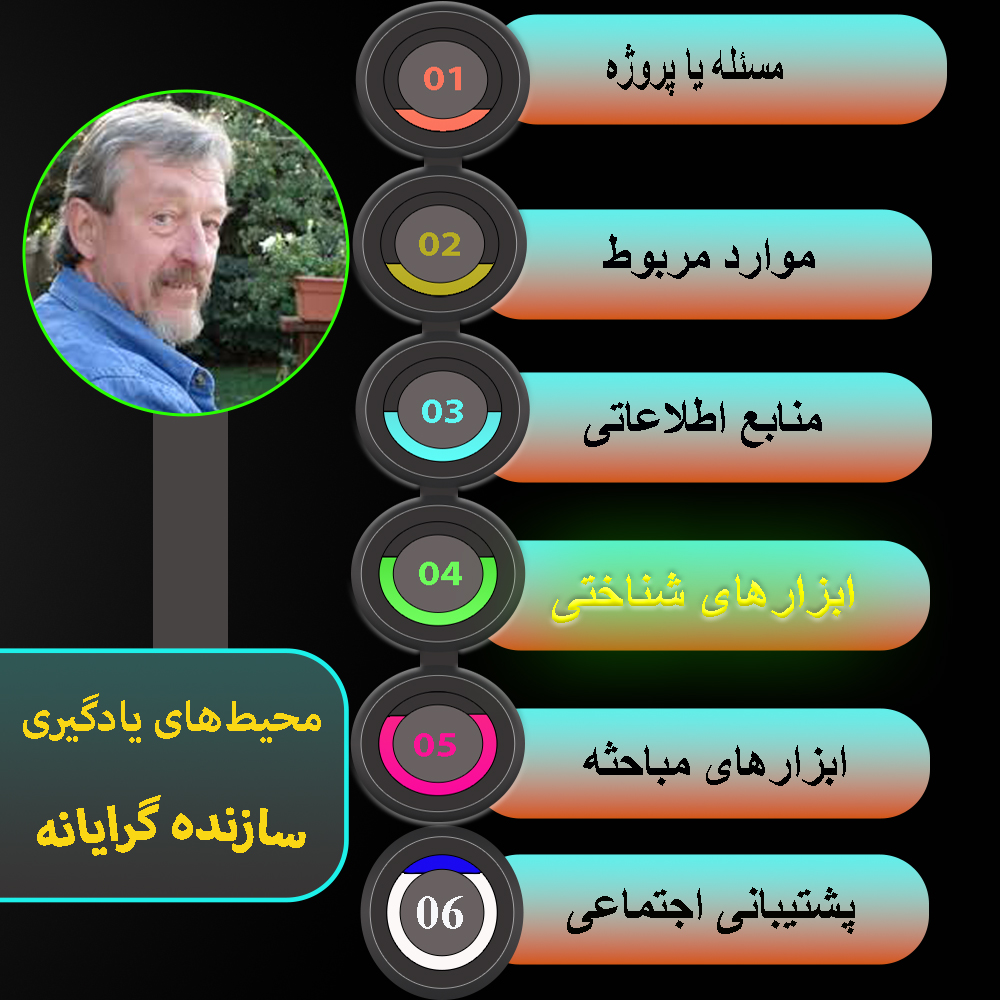
دیوید جوناسن و توماس دافی که یکی در دانشگاه میسوری و دیگری در دانشگاه ایندیانا بوده است، در ارتباط با سازندهگرایی در آموزش، مقالات، کتابها و نوشتههای مهمی دارند که در این بخش، دو قطعه از مهمترین بخشهایش را به همان زبان اصلی درج کرده ایم.
Constructivism provides an alternative epistemological base to the objectivist tradition. Constructivism, like objectivism, holds that there is a real world that we experience. However, the argument is that meaning is imposed on the world by us, rather than existing in the world independently of us. There are many ways to structure the world and there are many meanings or perspectives for any event or concept. Thus, there is not a correct mean- ing that we are striving for. Meaning is seen as rooted in, and indexed by, experience (Brown, Collins, and Duguid, 1989a). Each experience with an idea- and the environment of which that idea is a part- becomes part of the meaning of that idea. That experience must be ex- amined to understand the learning taking place. For example, the experience with concepts and re- lations in school typically is quite different from the experience with them in the real world. Resnick (1987), Brown, Collins, and Duguid (1989a), and Sherwood, Kinser, Hasselbring, and Bransford (1987) all point to these differences as a major fac- tor underlying the failure of transfer from schooling. While the philosophical roots of constructivism antedate modern learning psychology, there is only enough space here to deal with current concepts.
A critical component of constructivism that is explicit in Suchman's arguments is that there is no ultimate, shared reality, but rather, reality is the outcome of a constructive process. Thus, when two people are carrying on a discussion concerning some issue, there is always uncertainty on the part of Person B as to whether Person A "really" under- stands the point being made. No matter how much A says "I understand," there is still uncertainty on the part of B as to whether he "really" did fully get the point. According to Suchman (1987), there should be uncertainty. Person A is constructing an understanding that cannot at all be identical to Person B. Each has constructed an understanding and revised it as necessary to permit them to come to certain agreements (the discussion), but this does not suggest that their understandings are identical. On a larger scale, Suchman presents the example of two people walking into a room. Each constructs a plan for functioning in that room. This plan is basically an attempt to impose order (rather than to "find" order) in the mass of stimuli and events. Each revises his or her plan as it fails to help in negotiating the environment (which includes physical and social negotiation). The important point is that each has their own construction, their own understanding, rather than both encompassing some common reality.
Be The Change You Want to See in The World


